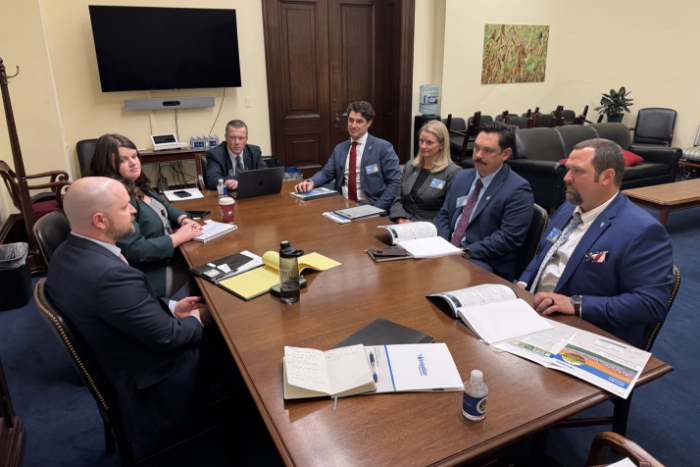
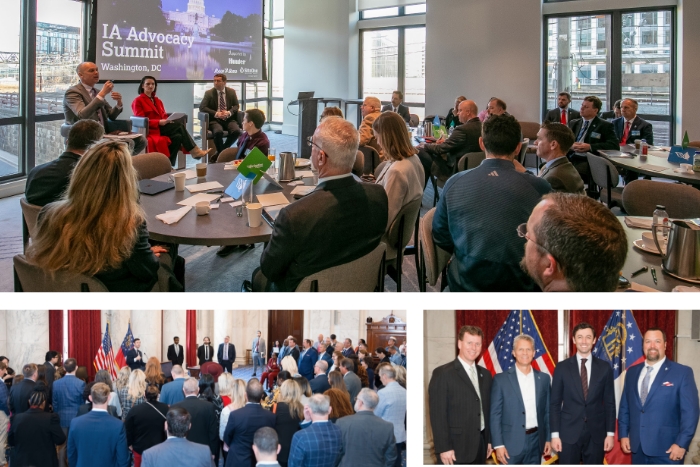
The Irrigation Association hosted its annual Advocacy Summit March 25–27, bringing nearly 30 irrigation professionals to Washington, D.C., to advocate for the industry’s top policy priorities.
Over the course of the two-day event, participants engaged in more than 40 meetings with congressional offices and federal agencies. Their message was clear: The irrigation industry is a vital force in the U.S. economy, supporting over 344,000 jobs and contributing nearly $24 billion in economic output.
“The program was exceptional,” says Gretchen Kah, executive vice president at K-Rain. “It was rewarding to learn that our collective voice as an industry association was heard, and in some small but meaningful way, we made a difference in perpetuating the changes we were advocating for.”
 Key advocacy priorities
Solutions to help conserve water: Attendees urged lawmakers to support the Water Conservation Rebate Tax Parity Act (H.R. 1871/S. 857). The bill would exempt water efficiency rebates from federal income tax, putting them on equal footing with energy rebates. This change would remove administrative burdens and encourage broader adoption of smart irrigation technologies.
Workforce needs: The Freedom to Invest in Tomorrow’s Workforce Act (H.R. 1151/S. 756) was another focal point. This bipartisan legislation would allow 529 savings accounts to cover expenses related to professional certifications, including those offered by the IA. This policy would help strengthen the irrigation workforce pipeline by making technical training more accessible and affordable.
Farm Bill reform: Summit attendees highlighted the need to modernize the Environmental Quality Incentives Program. Current eligibility rules exclude many new irrigators from accessing conservation funding. The association advocated for updates that would better support producers adopting efficient irrigation technologies. It also emphasized the need to streamline the Technical Service Provider program to allow certified professionals to more easily support producers in the field.
Meetings and engagements
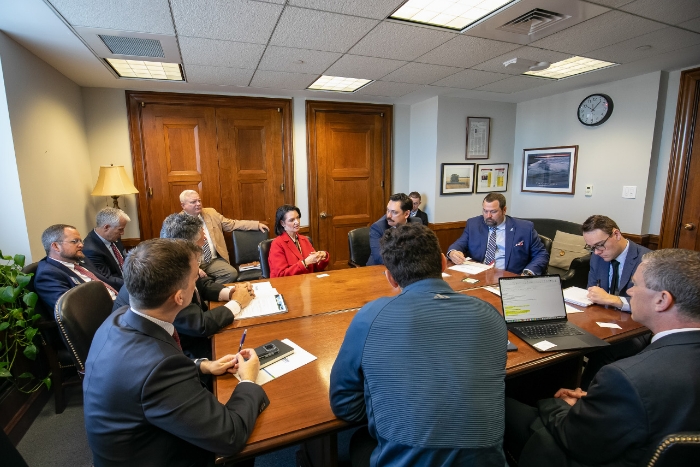 Over the course of two days, attendees participated in more than 30 meetings with congressional offices and federal agencies, sharing the irrigation industry’s story and emphasizing its national impact — supporting over 344,000 jobs and generating nearly $24 billion in economic activity.
In a meeting with Rep. Jimmy Panetta, D-CA, a member of the House Ways and Means Committee, industry representatives highlighted the role of tax policy in promoting water conservation and workforce development, focusing on key legislation like the Water Conservation Rebate Tax Parity Act and the Freedom to Invest in Tomorrow’s Workforce Act.
The delegation also met with staff from Sen. Mark Kelly’s, D-AZ, office to discuss the need for Farm Bill reforms, including updates to EQIP that would make water conservation support more accessible to producers.
At the EPA WaterSense meeting, attendees underscored the importance of aligning federal water efficiency programs with industry-led innovation and standards.
In each meeting, IA members shared personal stories and local perspectives, reinforcing the industry’s essential role in advancing water conservation, strengthening the agricultural economy and supporting American workers.
 Looking ahead
The Irrigation Association is in the planning stages of its 2026 Advocacy Summit. Watch irrigation.org in early 2026 for information about supporting this event or participating.
“The Advocacy Summit underscored the strength of our industry’s voice in Washington,” says Nathan Bowen, vice president of advocacy and public affairs at the IA. “We’re here to advocate for smart policy but also to show that irrigation professionals are essential partners in solving today’s water, workforce and conservation challenges.”