According to the U.S. Small Business Administration, a “small” business can employ as many as 1,500 people. Yours is probably a lot smaller than that! But whether you have 5 or 500 employees, you have something that hopefully works as a team to attain your desired goals.
Could your current team be more effective, either individually or collectively? Unless you are very fortunate, the answer is probably yes. What will it take to make that happen? It probably means some combination of better people, better training and better management.
Here’s a simple statement of fact. Some people are well suited to the job they’re being asked to do and some are not. Being well suited involves two things: skills and attitudes. Experience might be a third requirement, but I think that’s the least important of the three and often the most misleading. There are lots of people in the workforce who have plenty of experience but still perform poorly.
What should you do if you employ people who are not well suited to their jobs? Your team won’t become better or stronger unless you act to make it happen!
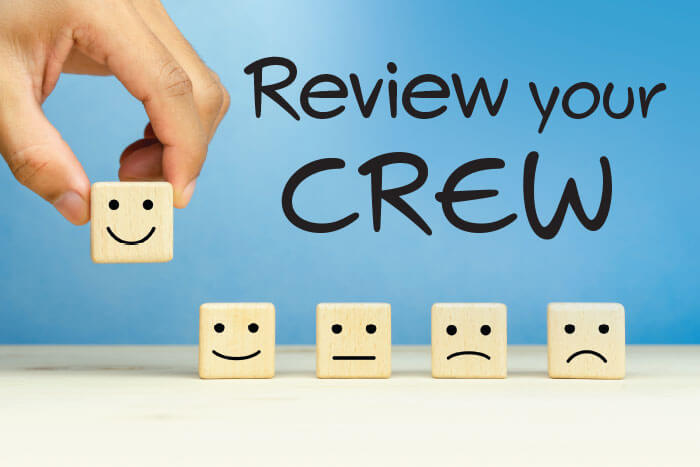
Here’s the process I recommend. It starts with an evaluation of your current staff. Make a list of all of your employees. Then, give each one a general rating on a scale of 1-10, with 10 meaning you couldn’t be happier with the individual’s performance. Anything lower means there’s room for improvement.
The second stage of this process involves a more detailed evaluation. Ask yourself, “What criteria can I look at to help me un derstand specific areas of strength and weakness?” Here are a few I recommend:
Again, this is a purely subjective 1-10 rating, and the list itself is only a starting point. It wouldn’t surprise me at all if you looked at “job skills” at the top of the list and said, “Hey, I can break that into four or five specific job skills that have to be considered.”
What do you do with this data now that you have it? The first thing is probably to consider whether this individual should be working for you in the first place! If the ratings are mostly positive, with just a few negatives, you’re probably looking at an individual whose performance can be slightly improved. If the ratings are mostly negative, though, you may be looking at someone who would take more of an effort.
Here’s something I want you to consider. Any skills necessary for a high level of job performance that are not present in a current employee must be taught through training. Any attitudes necessary for a high level of performance that are not present in a current employee must be encouraged through management or motivation. If you have enough time and other training and management or motivational resources, you can almost always improve performance. If you don’t, though, you probably can’t.
The next thing you should do with this rating data is to craft a performance improvement plan for each member of your team. You have identified specific weaknesses, so now you ask yourself how you can strengthen those weaknesses. Beyond that, you may also have to ask yourself which weaknesses to address first.
This is an important issue, and it applies both to individuals and to your team as a whole. One individual may have two or more areas for improvement, but you only have time and other resources to deal with one of them. That means you need to decide which is the most important one and how much improvement you should be looking for. Let’s say that you rated an individual as a 5 in two areas, but you recognize that one of the items is really the fundamental problem. You might make a plan to work on that one for the next 30 days with the goal of getting the employee from a 5 to a 7 in that time frame. Then you could switch to the other area for the next 30 days with a similar goal. After that, you might go back to the first item for another 30 days, with the goal of getting from 7 to 8, or you might stick with the other one for another month. Remember that this is all about improvement, and it’s perfectly OK if that improvement comes over time.
As I stated earlier, some people are well suited to the job they’re being asked to do, and some are not. That includes managers too! Perhaps you need to improve your own skills and attitudes. Here is a few criteria for your own self-evaluation, again, on a purely subjective scale of 1-10.
It’s worth considering, I think, that making yourself a better manager might ultimately yield greater results than any shorter-term actions with your current employees. Obviously, both are important. I’m just saying, don’t ignore any way in which you might be the one holding your team back!