
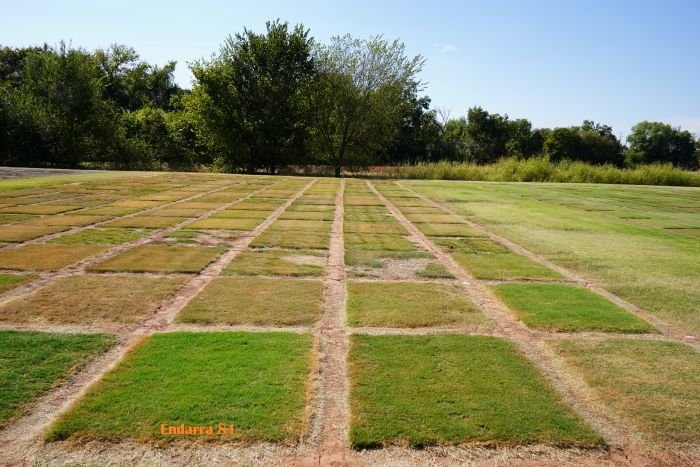
Frequent drought conditions, increasing watering restrictions and rising utility costs challenge irrigation contractors to meet all those demands while delivering on property owners’ aesthetic expectations.
“Unfortunately, drought conditions are part of our weather patterns in many regions in the USA,” said Yanqi Wu, PhD, a Regents Professor in plant breeding and genetics in the OSU Department of Plant and Soil Sciences. “In the two most recent decades, it appears drought has occurred more frequently and intensified in many locations.”
For more than a decade, researchers have been working to develop a turfgrass variety that can withstand drought to reduce water use, meet local regulations and provide property owners with the lawn they desire.
“Since 2010, the USDA Specialty Crop Research Initiative provided three grants to scientists at several major universities, including us,” said Wu. “[The grants were] to develop drought-resistant warm-season turfgrasses, such as bermudagrass, zoysiagrass, St. Augustinegrass and seashore paspalum.”
In 2017, the OSU program released Tahoma 31, and in 2024 it released Endarra 81, one of the cultivars developed from the research project. What sets Endarra 81 apart from older bermudagrass varieties is its root system. The grass develops deeper roots that allow it to access water from a larger soil profile, helping it withstand extended dry periods before showing signs of stress.
“If annual rainfall is around 30-35 inches, like it is in Stillwater, Oklahoma, Endarra 81 probably does not need much irrigation,” Wu said. “If annual rainfall is lower than 30-35 inches, supplementary irrigation is required to maintain acceptable turfgrass quality. Normally, Endarra 81 needs irrigation after 5-6 weeks of drought.”
Rather than relying on frequent irrigation, Endarra 81 performs best when irrigation is scheduled further apart and delivers more than one inch of water at a time. This encourages roots to continue growing deeper into the soil profile while maximizing the variety’s natural drought tolerance.
“The best time to start irrigation is when the grass shows obvious drought stress,” Wu said. “Irrigation should be less frequent than old varieties. But each time, irrigate more than one inch of water.”
Supported by a decade of research
The release of Endarra 81 follows more than a decade of research focused on improving drought tolerance in warm-season turfgrasses. OSU’s breeding program has a large and diverse bermudagrass germplasm collection from many regions worldwide. The research team evaluated thousands of bermudagrass plants to identify desirable traits such as drought resistance, cold hardiness and overall turf quality.
“From the collected germplasm, we selected elite plants in both common bermudagrass and African bermudagrass and developed them into breeding populations. Then we made crosses between best parents from the two species,” Wu explained. “Each year, we generated 20,000 to 60,000 progeny plants in greenhouses. Then we selected the best-looking progeny for field testing. These plants were tested in various field trials in multiple locations for multiple years. Finally, the best plant was released as a new variety, Endarra 81.”
Under extreme drought conditions, Endarra 81 retained 92.8% of its green cover compared to other drought-tolerant varieties. The variety recovered from drought stress faster and used just 28% of the water required by other widely used hybrids. Endarra 81 sod is expected to be available in select markets and in limited quantities by 2027.
Rethinking irrigation schedules
Because Endarra 81 has deeper roots and requires less water than many existing hybrid varieties, contractors may need to rethink traditional irrigation schedules.
“Weather and soil are so variable in the southern U.S., irrigation contractors need to make a close observation of this new variety under drought conditions,” Wu said. “The best time to start irrigation is when the grass shows obvious drought stress. Old varieties are likely to show drought stress after three to four weeks of drought. The new variety probably shows stress in a longer time. Again, many environmental factors would affect water supply from the soil to the turfgrass.”
As drought conditions continue to intensify in many regions, Wu expects demand for drought-tolerant turfgrass varieties to grow. By pairing drought-tolerant turf varieties with smart irrigation practices, contractors can help property owners maintain high-quality landscapes while using significantly less water.


