When you’re considering how to make an irrigation system more efficient for a client, smart controllers, sensors, high-efficiency nozzles and dripline may come to mind first. These products all contribute to maximizing system efficiency and reducing water waste. But one of the most impactful upgrades often gets overlooked: maintaining consistent and proper pressure regulation.
“When the system is at optimum pressure, it allows for a higher distribution uniformity, which allows you to irrigate more evenly, and there isn’t extra stress on system components,” says Arianne Williams, product manager of landscape sprays and drainage at Rain Bird Corporation.
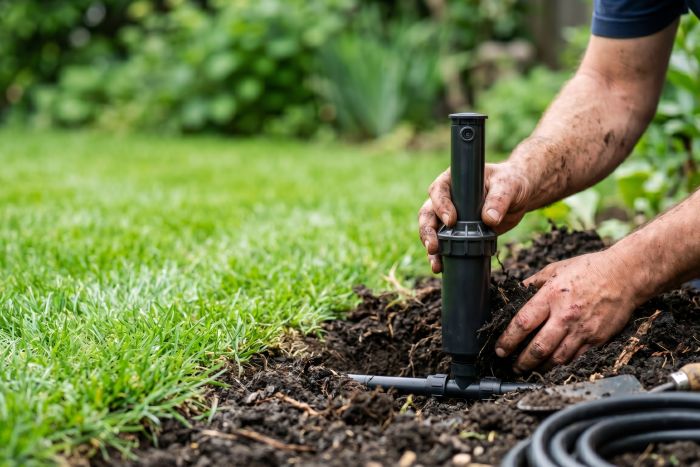
Yes, the up-front cost for pressure-regulating spray bodies, valves and regulators is slightly higher — just a few dollars more per item — but the return is significant. The water savings, extended system lifespan and improved efficiency quickly pay back that investment, often in the first year.
Plus, projects that use WaterSense-certified, pressure-regulated spray bodies may qualify for rebates and meet state or municipal codes, according to Andrea Kockler, product manager of MP Rotator and sprays at Hunter Industries.
“Pressure regulation pays off quickly by lowering water and energy bills, minimizing system wear and aligning irrigation systems with sustainability goals,” she says.
Whether you’re installing a residential system or managing a sprawling commercial property, consistent pressure ensures every head applies water exactly where it’s intended without overspray, misting or uneven coverage. Beyond improving site aesthetics, pressure regulation reduces water waste, eases the demand on municipal infrastructure and supports long-term drought resilience.
 The importance of proper pressure regulation
Every irrigation system should be designed to operate at recommended pressure rates. Ideally, residential water pressure is between 40 and 60 psi, with commercial water pressure ranging from 40 to 80 psi, but this can vary based on the site.
Irrigation manufacturers design their products to operate at specific pressure levels. For example, 45 psi is ideal for rotors, and 30 psi is the optimal pressure for spray nozzles. For multistream, multitrajectory nozzles, 40 to 45 psi is the optimal pressure, though it is important to confirm manufacturer-specific specs, explains Kockler.
Under too much pressure, water atomizes into mist, drifting away in the wind instead of reaching the soil. With too little pressure, spray patterns collapse, leaving dry spots that frustrate property owners and increase callbacks.
“If pressures are even 10 to 15 psi higher than recommended, water atomizes and drifts away, wasting up to 30% more water,” Kockler says.
While a lot of attention focuses on heads and nozzles, pressure regulation throughout the irrigation system is essential because it ensures every component operates at its intended performance level.
“One thing that’s often forgotten is that with proper pressure regulation, you can carry system pressure farther,” Williams says. “Without regulation, excessive pressure at the first few heads in a zone causes misting and wasted water, while the heads at the end of the line may not pop or deliver full coverage because friction loss has dropped the pressure too low. With correct operating pressure, you eliminate those extremes.”
Four consequences of poor pressure
Poor or fluctuating pressure can quietly undermine even the best irrigation design. From wasted water and stressed components to uneven coverage and higher maintenance costs, here are four ways pressure problems directly affect system performance.
1. Water waste and overspray
High pressure creates misting. Instead of droplets falling onto targeted areas, water drifts onto sidewalks, driveways or neighboring properties, or evaporates before it hits the ground.
Overspray not only wastes water but can also flood sections in the lawn or landscape, leading to runoff violations in municipalities with strict water use ordinances.
“Inconsistent pressure across zones reduces design intent and may void efficiency certifications like WaterSense or Florida Water Star,” Kockler says.
2. Component stress
High pressure puts strain on valves, fittings, seals and pipes, leading to leaks, premature failure and higher maintenance costs.
“Excess pressure stresses seals, diaphragms and fittings,” Kockler says. “By regulating pressure at the valve, you reduce system wear and tear, prevent pipe bursts and lower service calls.”
She adds that by regulating pressure at the head, you ensure that each nozzle sees the same amount of optimal pressure, improving the system’s performance and overall longevity. This improves reliability and reduces warranty issues over time.
3. Poor coverage and dry spots
Low pressure prevents heads from fully opening or achieving head-to-head coverage, leading to patchy turf and plant stress. Nothing generates a customer complaint faster than a lawn burnout or weepy, wilting or dead plants.
4. Higher utility bills
Homeowners and commercial property managers are hypersensitive to the cost of operating a system. One of the first questions they ask is, “Will this raise my electric bill?” Irrigation systems require power, but those with proper pressure regulation require less energy.
“Lower flow rates reduce pump demand and energy consumption, cutting utility costs while shrinking the system’s carbon footprint,” Kockler says.
Identifying pressure issues
Even well-designed systems can have pressure challenges. So, carrying a reliable pressure gauge and conducting routine checks, especially at system startup in spring, is key to catching issues before they escalate.
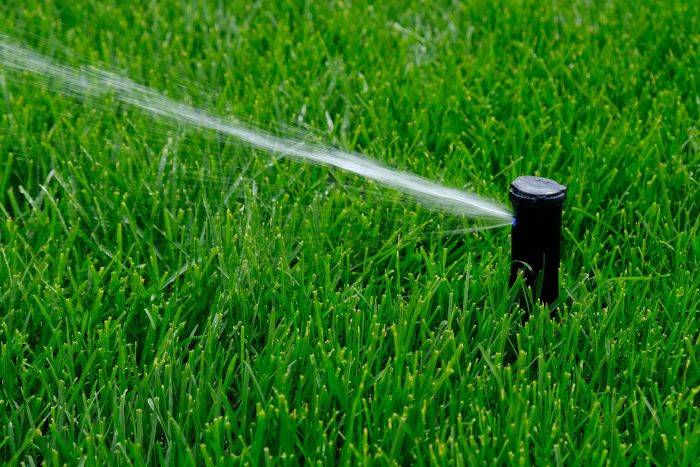
One of the telltale signs of poor pressure regulation is misting rather than a steady stream of water coming from sprays and rotors, indicating that system pressure is too high and lacks adequate pressure regulation.
“By a mist, the pressure is probably around 70% or higher than the ideal 30 psi,” Williams says. “When you lower the pressure, you’re creating larger water droplets that better target the areas you’re trying to irrigate.”
In this scenario, first check the system pressure at the source to determine if the system needs a regulator or if it’s working correctly. If the answer is yes, confirm that pressure-regulating sprays and rotors are in use and functioning properly. Check the nozzles to ensure you have the proper ones for the available pressure and coverage area.
“Always verify dynamic pressure differential for proper regulator function,” Kockler says.
Another indicator is that heads don’t pop up or don’t fully pop up when the system is operating. In addition to site pressure, issues such as broken fittings, cracked pipes or clogged filters could be contributing to fluctuating pressure. As a best practice, Kockler recommends always combining pressure regulation with filtration when required at the point of connection.
“With a mist, the pressure is probably around 70% or higher than the ideal 30 psi. When you lower the pressure, you’re creating larger water droplets that better target the areas you’re trying to irrigate.”
— Arianne Williams, product manager of landscape sprays and drainage, Rain Bird Corporation
Another signal of poor pressure or pressure fluctuations is uneven zone coverage, which can occur if a regulator has failed, if there are too many heads on one zone or if the pipe was undersized. Leaks at fittings — caused by improper installation, pressure surges or sustained high pressure — can also be a problem.
 Pressure regulation mandates
Maintaining proper pressure regulation is more than a best practice. Some states and local municipalities have enacted codes requiring pressure regulation.
“Several U.S. states mandate pressure-regulated irrigation products, typically requiring that spray sprinkler bodies meet the EPA WaterSense Specification for Spray Sprinkler Bodies,” Kockler says. “These laws generally apply to products manufactured or sold after specific effective dates.”
She shares this list of examples:
- California requires WaterSense-certified, pressure-regulated spray bodies for products manufactured after Oct. 1, 2020.
- Washington enacted similar requirements to California that went into effect Jan. 1, 2021.
- Hawaii, Colorado and Vermont have laws in effect that require pressure-regulated sprinkler bodies at the point of sale.
- Massachusetts, Rhode Island, New Jersey, Maine and New York enacted regulations between 2021 and 2023 that require pressure-regulated spray bodies.
- Washington, D.C., has an enforced requirement for WaterSense-certified, pressure-regulated spray bodies that first went into effect in 2022.
- Nevada passed SB220, which mandates pressure-regulating spray bodies, effective Jan. 1, 2024.
“Some cities or utilities may have local codes or permit conditions requiring pressure regulation or offering incentives/disincentives,” Kockler adds. “For example, the city of Austin [in Texas] requires irrigation inspections to confirm proper pressure and prevent misting during operation, and Florida Water Star certification mandates pressure-regulated spray heads or valves for new developments in many municipalities.”
The bottom line
Pressure regulation is about more than following best practices. It reduces callbacks, saves clients thousands of gallons of water, protects system components and builds credibility as an industry leader.
And a few extra dollars spent at installation are paid back quickly through reduced utility bills, improved system longevity and sustainable performance.