For many contractors, the fastest path to savings isn’t a new install — it’s smarter retrofits. Swapping legacy sprays for drip, adding PC emitters and right‑sizing zones can trim water use by double digits and reduce service calls. Paired with available incentives, those changes pay back quickly while keeping landscapes compliant and healthy.
Why retrofitting?
“Outdated spray systems in landscape beds are wasting water and struggling to meet local requirements,” says Larry Giroux, Ewing Outdoor Supply residential-commercial segment manager, adding that retrofitting with low-volume drip irrigation is a major growth opportunity.
More property owners are looking for ways to reduce water use and stay compliant with local regulations, Giroux notes, and many upgrades also qualify for rebates through local utilities or state programs.
Contractors can help clients view upgrades as a smart financial move by saving water costs, he says.
Retrofits using durable materials that withstand UV damage and resist clogging save contractors time by reducing service callbacks, enabling the crew to focus on new projects, he adds.
Retrofitting options
A retro drip adapter is a simple upgrade that installs quickly without digging or replacing valves, transforming spray heads that waste water, cause runoff and lead to callbacks, says Giroux.
Drip irrigation delivers water directly to the roots, reducing waste, eliminating dry spots and promoting healthier plants. The systems meet water regulations, reduce labor and improve landscape performance. Pair the adapter with the correct dripline or emitters based on planting zones.
For dense shrubs, use a dripline with a barbed swivel for easy connection and coverage. For more open areas or sparse plants, compression swivels with polyethylene tubing work well. Seal off unused risers to avoid leaks and wasted water, Giroux notes.
For dense planting areas like shrubs or tightly spaced perennials, the barbed swivel connection paired with EZ-ID CV dripline provides flexible routing and targeted water delivery. The check valve feature in the dripline helps reduce low-point drainage in systems with elevation changes.
“Outdated spray systems in landscape beds are wasting water and struggling to meet local requirements.”
— Larry Giroux, residential-commercial segment manager, Ewing Outdoor Supply
For more open or sparsely planted zones, a compression swivel with 710 PE tubing allows for longer runs and easy emitter placement where needed, says Giroux, adding that contractors should always cap unused risers with sprinkler shut-off caps to avoid leaks and maintain system efficiency.
The retro drip adapter eases the transition of upgrading existing spray systems through eliminating the need for new piping or valve replacements while automatically managing pressure and filtration, helping to prevent overspray and reduce callbacks caused by clogs or broken heads.
Giroux notes that quarter-inch dripline and micro sprays are designed for precision in tight spaces and are low-volume tools reducing water waste, cutting down on labor and helping raised beds, planters and hanging baskets thrive by delivering water right to the root zone. Their flexibility allows it to snake around plants and obstacles, delivering low-volume water evenly along the entire line.
These options support healthier plant growth and are most effective in well-draining soils and flat or gently sloped areas. In challenging terrain or heavy soils, choosing pressure-compensating emitters or dripline helps maintain consistent output and avoids overwatering in low spots.
The tools help mitigate the challenges of time-consuming hand-watering and overhead sprays, which can waste water because of wind, evaporation and runoff, and degrade sidewalks and walls through overspray.
These tools work best in calm conditions and where coverage can be carefully controlled, says Giroux, adding that in windy areas or for plants that need deeper watering, options like point-source drip may offer better results.
Choose UV-resistant materials built to withstand outdoor conditions to prevent cracking, clogging and early system failure, says Giroux, adding that parts compatible with standard fittings also make installation easier and simplify future maintenance.
Pressure-compensating options are key for ensuring even water distribution across beds and containers, especially where elevation or soil conditions vary, he adds.
For dripline, selecting the right emitter spacing based on soil type helps improve absorption and avoid pooling. With micro sprays, adjustable spray heads offer flexibility to match plant size and layout.
Bubblers and point-source emitters provide precise and efficient irrigation by delivering consistent moisture directly to the root zone, conserving water, encouraging healthy plant development and minimizing maintenance needs, Giroux says.
These tools support a smarter, sustainable approach in landscapes with varied plant types or challenging soil conditions.
Bubblers for trees should be installed near the edge of the root ball — not directly at the trunk — to encourage outward root growth and better water absorption.
“The cost of installing a flow meter can pay itself off in one mishap.”
— Todd Ferguson, irrigation and lighting designer, Chesapeake Irrigation & Lighting
Point-source emitters work well with containers, tight beds or clusters of small shrubs, says Giroux, noting they are compact and clean and deliver low-volume water directly to the plant with no overspray, waste or guesswork.
Emitters are especially useful for root-sensitive plants and landscapes with mixed species, offer consistent performance across varied pressure conditions, are quick to install in new and existing systems, and do not require constant turning or troubleshooting, he adds.
Giroux advises the use of pressure-compensating emitters when working on sloped terrain or areas with variable pressure to ensure consistent flow across the entire system.
Combine emitters and bubblers with simple pressure regulators and filters to extend system life and reduce future repairs, he adds.
When choosing bubblers and emitters for drip systems, look for UV-resistant materials that can withstand tough jobsite conditions, says Giroux, adding that standard fitting compatibility helps ensure fast and simple installation and easy integration into existing setups.
A compact design is also useful for fitting into tight or irregular spaces without compromising system layout, he adds.
In practice
Samuel Thayer, president of Maxijet and Mister Landscaper, notes his company considers retrofit opportunities when the contractor is asked by a customer to change out high-volume spray heads to a low-volume irrigation option in their landscaping.
“For example, if they have an underground irrigation system in the flower beds that are currently being watered with a ‘spray head’ … that uses 60 to 180 GPH (1 to 3 GPM) and spraying a 10- to 15-foot coverage, the contractor can take off the high-volume spray head and put on [one] of our half-inch female pipe thread adapters that has two opposing quarter-inch barbs and run our quarter-inch vinyl over to two to four of our micro spray stake assemblies — now reducing the water flow down to 20 to 60 GPH,” he says.
In identifying retrofit opportunities, Todd Ferguson, an irrigation and lighting designer for Chesapeake Irrigation & Lighting, says he looks at the controller while at a client’s home as that is the most updated item.
Clients who upgrade their controller will have the ability to use a rain sensor, connect the controller to their Wi-Fi and operate it via an app with multiple benefits and the ability to use a flow meter, allowing them to monitor water usage while also detecting system leaks, Ferguson says.
His company also offers rotary nozzles, which can be retrofitted onto an existing spray head or rotor head to improve efficiency by 30%, since they are able to cut through wind and efficiently distribute the water to the ground, Ferguson says.
The transformer is another item he considers for retrofitting. “Depending on the customer’s needs, we can offer them a transformer with a built-in astronomical timer that automatically adjusts the time to account for the sunset changes and daylight saving time,” he says.
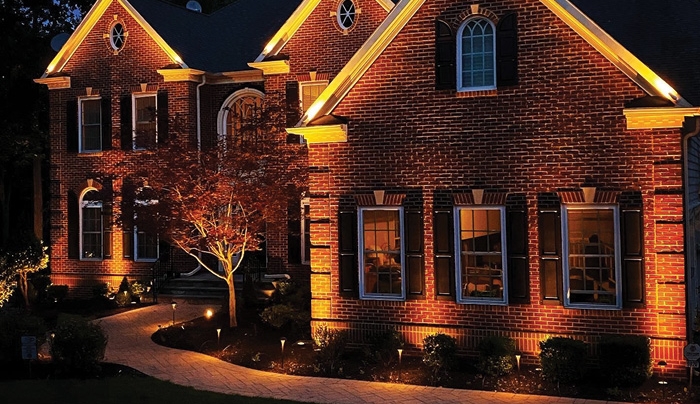
Wi-Fi timers allow customers to control the system through an app. Ferguson says his company can install a transformer that can group light fixtures into zones, dim the lights and change their color. That option uses the existing wire but requires changing the light fixtures or lamps inside them.
Ferguson says a common upgrade is an astronomical-timed transformer and the lamps inside the existing fixtures from incandescent to LED, as this is most affordable and offers a better ROI.
In upgrading to a Wi-Fi controller and installing a rain sensor and flow meter, the ease or difficulty of repairing and adjusting zones depends on the existing system’s design, says Ferguson.
He notes that while lighting and irrigation retrofits can be bundled during one project, performing both retrofits at the same time does not offer additional benefits. “The best way I communicate ROI to the homeowner is through the ease of use of each system and through cost benefits,” he says. “Homeowners usually have these systems to improve and maintain their landscape. A new controller with Wi-Fi, rain sensor and flow meter will allow them to conveniently make changes to their schedule and offer a sense of security with the flow meter and rain sensor.
“A homeowner does not want to have to turn off the controller every time it is supposed to rain; the rain sensor takes that hassle out of the equation,” he adds. “If a bad leak in the irrigation system goes unnoticed, it can result in a high water bill and expensive repair. The cost of installing a flow meter can pay itself off in one mishap.”
Customers appreciate the low power consumption of LED lamps that save money on electricity and prevent the hassle of changing burnt-out lamps, he adds.
Ferguson’s company offers a one-year warranty on workmanship and a five-year warranty on products, “as each product is intended to last this long per manufacturer specs,” he says, adding that irrigation maintenance is performed twice yearly, during which the tech makes necessary repairs.
To overcome a potential client’s objections about upfront costs, Ferguson suggests focusing on the reason for installing the system.
“Depending on their budget, they may value some add-ons over others, but they all strive to have a system installed that is low maintenance and efficient so that it saves them time and money overall,” he adds. “The benefits are that this plant material will receive a slower rate of watering, lighter spray of water droplets, and (it) greatly reduces runoffs and overwatering.”