Irrigation contractors and technicians work around underground utilities, pressurized water lines and electrical components daily to complete projects on schedule. During peak season, when crews are booked solid, clients want their systems operating quickly and changes occur on a moment’s notice, it’s easy to gloss over safety best practices to get the job done.
But skipping safety protocols can put workers at risk for injury, delay projects or damage infrastructure. These five best practices can help you keep your people safe and projects moving along smoothly.
1. Call before you dig
Underground hazards are one of the biggest safety risks on irrigation projects. While calling 811 before digging is essential, Michael Astram, president of Northern Designs LLC, an irrigation consulting and design firm in Connecticut, encouraged contractors to go a step further.
“On a lot of irrigation projects, due diligence isn’t always done,” he said. “You have utilities located out of sight, and that can always be a big issue.”
He suggested meeting with the property owner or site manager to discuss any known underground infrastructure that may not appear in the plans. Employees who have maintained a property for years often know where older sewer lines, irrigation piping, electrical conduits or other buried utilities are located that don’t appear on incomplete, outdated or undocumented drawings and as-builts.
Commercial projects also require coordination with other trades, including electricians and plumbers, according to Astram. Understanding each trade’s responsibilities helps contractors avoid delays, safety risks and having to redo work.
“Know the terminology of electricians and plumbers and have the ability to coordinate your part of the irrigation system with them,” he said.
2.Trench safety
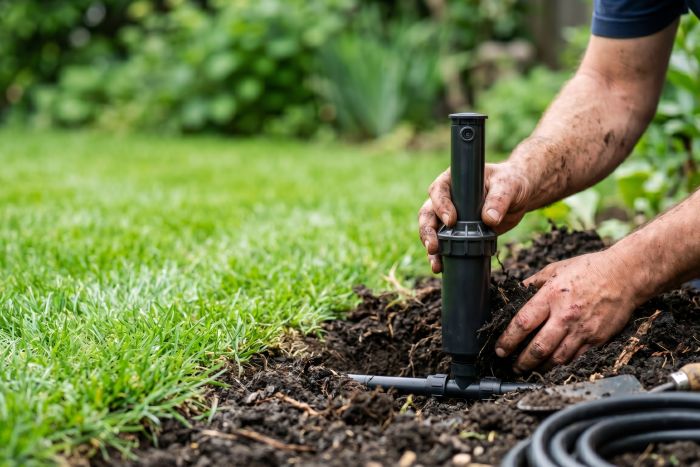
Although irrigation trenches are typically shallow, they can create safety hazards. Embassy Landscape Group requires technicians to complete all gluing outside the trench to reduce exposure to fumes.
“You don’t want anybody passing out from fumes,” said Nick Novak, irrigation service manager at Embassy Landscape Group based in Kansas City.
When digging requires more than two feet, the company requires a second employee on site.
“We have had someone reach into a hole on an install and not be able to get back out,” Novak said. “So, we mandate a helper if a technician is digging more than 24 inches.”
3. Electrical safety
Although irrigation systems are low voltage, contractors should not assume electrical work is risk-free.
“Don’t ever touch bare wires with your hands, especially if you’re trying to determine whether there’s power,” Novak said. “If we can’t shut the breaker off, we won’t diagnose the controller.”
Astram agreed that any part of the project that involves the power source must be done by a licensed electrician, and that all irrigation equipment should be properly grounded.
“A lot of times I see controllers not grounded at all,” he said. “If you have lighting issues, grounding eliminates the risk of ruining the system.”
Astram also recommended minimizing the number of splices in a wire piece because splices are potential weak points that could lead to future failure. All wired connections should be made with a UL-listed water-resistant splice, not with electrical tape or a basic wire nut, he explained.
“Leave excess wire in valve boxes for future modifications, corrections or maintenance issues,” he said. “We install all low voltage wiring in conduit to protect it, especially with a two-wire system decoder system, because just a little nick in the wire can cause issues down the road.”
4. Water safety
Water can be as hazardous as electricity when irrigation systems. Before making repairs, especially on mainlines, confirm the water supply has been shut off.
Novak recalls tracking a mysterious leak that flowed for more than a year before his team discovered the cause.
“We dug down and found a compression fitting had worn a hole into the pipe and created a cavern underground,” he said.
He keeps the damaged fitting on his desk as a reminder that water under pressure can be destructive.
5. Heat safety
Peak irrigation season occurs during the hottest months of the year. Ensuring employees stay hydrated and equipped with sun protection helps them avoid heat-related illnesses.
“A long-sleeved shirt helps keep you protected from the sun’s rays; wide-brimmed hats, sunglasses, and bringing sunscreen all help with protection from the sun,” Novak said.