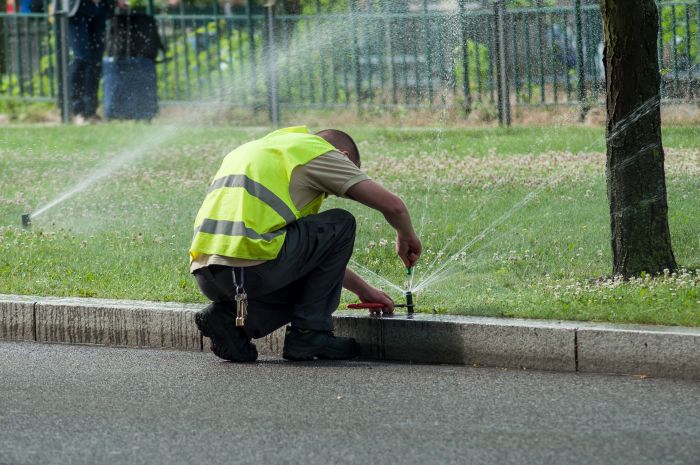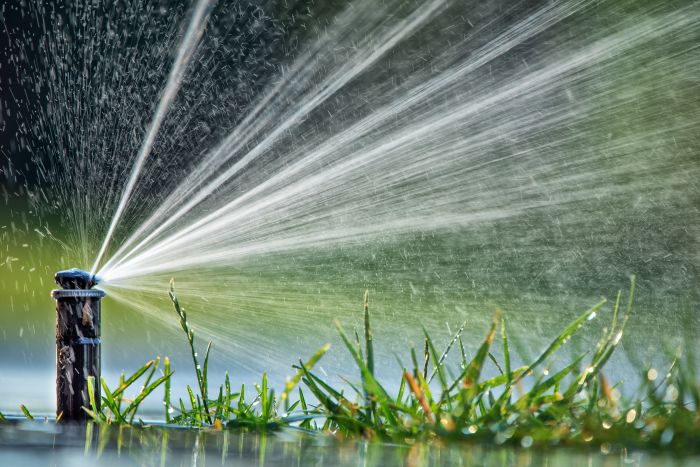
A broken sprinkler shooting water into the air is easy to spot. So is a major main line break spilling water down the curb. But smaller leaks can continue for days, weeks or longer without being noticed, wasting large amounts of water over time.
“One statistic that really stands out came from SAWS data cited by the Texas Water Conservation Advisory Council,” said Wade Radlet, principal at PRA Irrigation Consultants, LLC based in San Antonio, Texas. “Approximately 10% of dedicated SAWS irrigation meters were showing continuous flow, with the total loss estimated at approximately 1.5 million gallons per day.”
The report added that outreach to customers reduced the figure, but continuous irrigation flow is still responsible for nearly 1 million gallons of potable water lost each day.
“Water is a limited resource here, and irrigation systems can lose a surprising amount of water without anyone immediately knowing there is a problem,” Radlet said.
Catching and repairing leaks early is critical, but it’s equally important to think beyond finding a leak once it occurs. Design and installation decisions can determine how quickly a leak is detected and repaired.
Start with design
Contractors and designers have an opportunity to build leak detection and easier troubleshooting into an irrigation system before a problem occurs.
“I think one misconception in general is that leak detection is primarily something that happens after a leak occurs,” Radlet said. “Ideally it starts during design.”
That means considering how the system operates when everything is working properly and what happens when part of the system fails. Choices about master valves, flow monitoring, pipe installation and system layout can significantly impact how easy it is to find and fix a leak.
“From our side, the biggest concern is generally not the large leak that is immediately obvious,” Radlet said. “It is the smaller leak on a section of the system that remains under constant pressure and can continue without anyone noticing it. We try to address the problem during design.”
5 Strategies for faster leak detection and repair
The more quickly a leak can be identified and repaired has the potential to reduce water waste and avoid unnecessarily increasing a property owner’s water bills. Radlet offers these five tips reduce leaks and find them quickly when they arise.
- Design systems to catch leaks quickly. This can be as simple as a master valve or include flow monitoring, automated shutdown, alerts to the maintenance team, and, on larger systems, even separate monitored mainline segments that can be individually isolated. Radlet said his team considers master valves to be non-negotiable on any project.“It is inexpensive on a new installation and provides a significant amount of protection,” he added.
- Use flow monitoring when possible. Basic flow detection is available from most major irrigation manufacturers at minimal complexity and cost. A flow sensor can report system flow to the controller, allowing the system to respond when flow is outside the expected range. Depending on the controller and system installed, this may mean shutting down the system, sending an alert to the maintenance team, or isolating a particular section.
- Reduce the risk of leaks during installation. Proper installation can reduce the likelihood of problems developing. Radlet recommends ensuring proper pipe depth, bedding and backfill, pipe material, separation from other utilities and overall installation requirements.
- Lay out systems to allow for isolation. “We try to make the process [of leak detection and repair] easier by laying systems out in a way that allows portions of the mainline to be isolated,” Radlet said. “On larger properties, strategic isolation valves or multiple master valve/sensor assemblies can allow the maintenance team to narrow the problem down to one area instead of investigating the entire system.”
- Plan for long-term serviceability. Organize valves and other components strategically so they are easy to access and service. A system may work perfectly on day one, but it also needs to be reasonably manageable 10 or 20 years later.
“Ultimately, we are not trying to design an irrigation system with the assumption that it will never leak,” Radlet said. “Any buried piping system will eventually need maintenance. The goal is to reduce the likelihood of a leak, give the owner a way to identify it sooner, and limit the amount of water that is lost before someone has an opportunity to respond.”