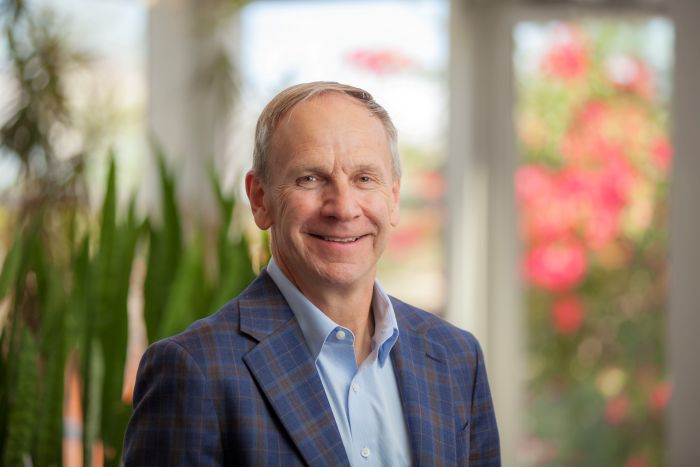
With a career shaped by service, education and innovation, Rain Bird Vice President Michael Roberts, PhD, brings a future-focused perspective to his role as president of the Irrigation Association.
In December 2020, he joined the IA Board of Directors after spending several years on the Irrigation Foundation board, was deeply involved in establishing IA scholarships, and began his journey to the presidency. From workforce development and advocacy to advancing industry standards, he reflects on the experiences that led to leadership and what he believes lies ahead for irrigation.
How has the IA influenced your career?
Before joining Rain Bird, I worked in the consumer products industry with Gillette/P&G, driving innovation and growth for multiple brands.
One of the first things I did when I entered the irrigation industry back in 2006 was to pursue an IA certification. I became a certified golf irrigation auditor because it was directly connected to the work I was doing at the time as the strategic business unit director of the Rain Bird Golf Division. That early experience really set the tone for how I’ve engaged with the industry ever since.
Since then, I’ve always relied on the IA as a tremendous source of industry perspective and education. The organization is the voice of the industry and unites all of us.
What are you most looking forward to during your time as president?
There are a few areas where I’m excited to contribute. First, advocacy is so important for our industry right now, and the IA is at the forefront. They are the objective, credible voice for our industry, and it is necessary to ensure that responsible legislation for our industry is enacted.
I’m also looking forward to continuing to help with workforce development initiatives. The IA is doing exciting work, including renovating certification programs, and these efforts are essential to the long-term health of the industry.
Over the last several years, there has been a growing sentiment among board members to create more mechanisms for giving back to the organization beyond quarterly meetings. I look forward to helping with the internal initiative to leverage the tremendous wealth and expertise of board members who are looking for ways to get more involved.
What do you see as the future of the irrigation industry?
My predictions are always a little risky, but I’ll share what I hope to see happen. First, I think “smart” will be the default in our industry. What we consider “advanced” today will be the standard way of operating.
Second, there will be a better balance and understanding of the value of irrigation. Today, there’s tension around water use and the value of landscape and agricultural irrigation. Some of those tensions will have come into better balance, so that the value of each for food and for the societal benefits of landscapes is better understood.
Finally, I see standards rising significantly across the industry for what constitutes a good product, as well as for installation and maintenance practices. These will become entry-level requirements for participating in our industry, helping develop a responsible, healthier industry.
What major trends are shaping the industry right now?
One major trend is regulatory change. There is a lot of legislation aimed at addressing water scarcity and conservation. That is why advocacy is so important: to ensure we end up with responsible legislation.
Another is the way we are leveraging technology for smarter irrigation from a product perspective. It’s everything from pressure regulation for sprays to smart controls, the possibilities of AI, and how we can continue to use water more wisely. I love the sense of competitiveness and the pace of innovation.
What do you enjoy outside of the irrigation industry?
My main hobby used to be raising my five sons, but they’re mostly grown now. These days, I practice Aikido, a Japanese martial art, which I’ve done for a long time. I also love fly fishing. Arizona might surprise people, but it has some of the best fly fishing in the world.
Community involvement is also important to me. I’m involved in mentoring through the Southern Arizona Research, Science, and Engineering Foundation, which has been very rewarding, and the volunteer initiatives Rain Bird leads including supporting the Southern Arizona Food Bank.
What advice can you offer to someone new to the industry?
Find something to volunteer for. We need more folks standing up in volunteer roles within the IA to act on behalf of our industry. Our people drive the strength of our industry, and getting early-career folks involved in groups like the IA is important. Volunteering is also a way to gain a broader industry perspective and to learn the skills relevant to your job.