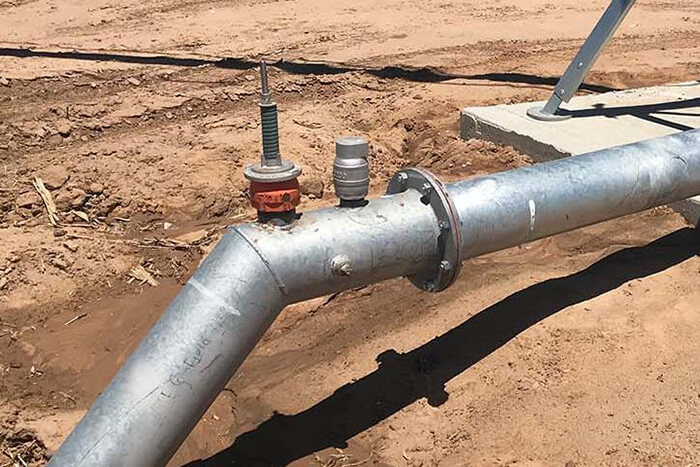
The Navajo Agricultural Products Industry, San Juan County, New Mexico, a tribal entity owned and operated by the Navajo Nation, is using the USDA Environmental Quality Incentives Program WaterSmart Initiative to upgrade 27 center pivots to increase irrigation efficiency on its land.
USDA’s Natural Resources Conservation Service has invested more than $173,000 in 2023 EQIP contracts, bringing the total investment in the EQIP WaterSmart Initiative in the Navajo Nation to $2.2 million since 2016. The center pivot upgrade on these fields will increase their sprinkler efficiency by 25%, according to a release from USDA.
“The WaterSmart funding greatly benefits us by improving our irrigation management program,” says Roselyn Yazzie, chief operations officer of NAPI, “We were able to replace old irrigation pivot systems and sprinklers with more efficient systems as well as soil moisture monitoring equipment to help us schedule irrigation as needed by the crop.”
NAPI farms grow alfalfa, corn, wheat and beans across 72,000 acres of farmland in San Juan County, with almost 700 fields under sprinkler production across their operation, according to the USDA press release.