In the early 1990s, Warren Gorowitz, CLIA, the director of sustainability and social impact for Hunter Industries and a past Irrigation Association president, attended what is now known as the National Collegiate Landscape Competition (NCLC). As a horticulture major at California Polytechnic State University, San Luis Obispo, he planned to become a golf course superintendent. He signed up to participate in one event: weed and turf identification.
“Even though I didn’t compete in the irrigation events, I had a chance to watch others and realized it was something I was interested in,” he said. “My first spark of interest in irrigation came from working on a local golf course as a teenager, but this was a chance for me to see it in a more practical way.”
For 50 years, the NCLC, which is organized by the National Association of Landscape Professionals (NALP), has been a critical part of the workforce development pipeline for the entire green industry.
“Landscape companies from all over the country come to recruit at NCLC because these are the future hires in the industry,” said Lisa Stryker, the vice president of communications and marketing for NALP. “These are the top students and companies are vying for them for internships and full-time positions. Students often leave with multiple offers.”
This year’s event, scheduled for March 18-21, will take place at Michigan State University’s East Lansing campus and will bring together nearly 800 students representing 60 schools. The four-day event features hands-on competitive events, a Career Fair, educational workshops, scholarship events and networking.
In an industry that Gorowitz describes as “small enough that relationships really do matter,” these early touchpoints are not just recruitment opportunities—they’re the seeds of long-term partnerships.
“There are people I met there that I still talk to 20-plus years later,” he said.
Hands-on events test real-world knowledge
The competition features three dedicated irrigation events: irrigation assembly, irrigation design and irrigation troubleshooting. Each lasts just under two hours.
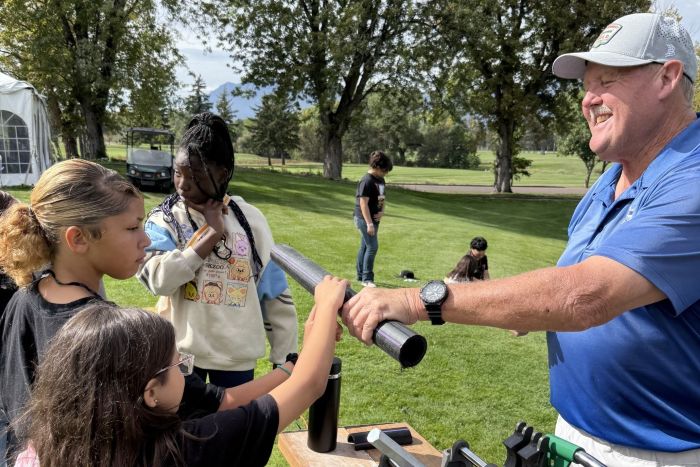
The Irrigation Assembly event provides a team of two students with a pile of irrigation components and a scaled plan. They must properly cut, weld, assemble and adjust multiple zones with exact precision to the plan. Then they run water, adjust all heads and call time to their judge if they finish. Afterwards, a team of judges will measure, inspect and scrutinize each system against a scoring rubric to determine the most accurate functioning systems.
“This is a fun one,” said Stryker. “Students build an irrigation system on the ground and turn the water on at the end to see if it was built properly or not.”
Irrigation Troubleshooting offers a team of two the opportunity to assess a pre-built, multi-zone system with any number of faults built in. They have a plan, a narrative and a judge overseeing them as they work through the electrical and hydraulic troubleshooting process.
“They (students) need to be adept with their multimeter and certainly need to understand both forward and reverse flow valves, because you know the judges messed with those,” said Jim Funai, PhD, an assistant professor of plant science and landscape technology at Cuyahoga Community College, East Campus. In 2025, CCC students won the Irrigation Design and Irrigation Assembly events.
“The students have to ensure proper sprinklers and nozzles are installed and adjusted according to the plan,” he added.
Irrigation Design is the king of the knowledge exams, Funai explained. One student from each participating school receives a test and a large-scale irrigation plan. They answer around 100 questions based on that design, including calculations for flow, friction loss, precipitation rates, infiltration rates and other surprise elements.
“They need to have a rock-solid understanding of irrigation concepts and applications,” he said.
Together, these events give students hands-on experience that mirrors real-world challenges.
“NCLC helps students learn skills beyond the classroom that are applicable to their future careers,” Funai said. “For irrigation specifically, it allows us to provide directed hands-on training for real-world applications of what they learn in the classroom.”
The competition also includes a landscape lighting category, in which one student per school designs and installs a small “residential” lighting system. The design may include pathway lighting, up lighting and down lighting. The lighting system must “work”, meaning that all lights must illuminate and provide the effect required by the design.
Where careers are launched
The NCLC’s career fair is also an essential component of the event, helping students launch their future careers and allowing employers to find top talent. This year, 84 companies from across the country will attend to recruit top students for internships and full-time positions. Workshops led by industry experts further deepen students’ exposure to real-world practices and career paths.
“As a student, it was refreshing to see what’s out there,” Gorowitz said. “For many students—especially those without an agricultural background—the event becomes a critical bridge between education and employment, helping them see roles they may never have imagined.”
Funai added that student career options are “flung wide open” after participating in this event. “We’ve had graduates stay in the northeast Ohio market and build successful irrigation careers as well as moving to different states and making a great living,” he said.
Photo courtesy of NALP.