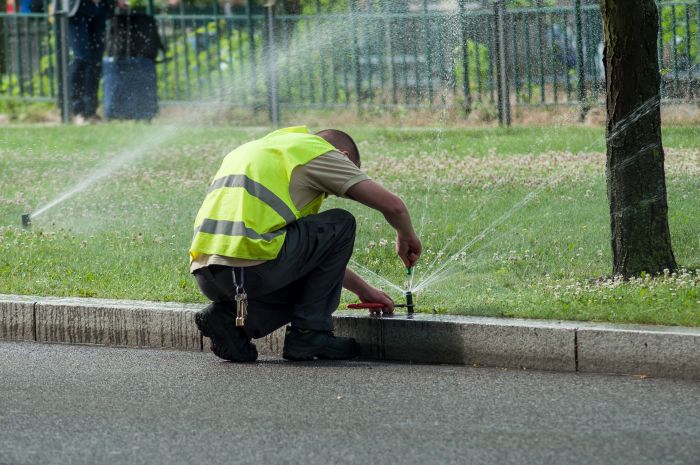
Eric Olson, CID, CLIA, an irrigation specialist at Fort Collins Utilities, Fort Collins, Colorado, breaks down the city of Fort Collins’ unique smart irrigation involvement, what it means to them as a city and how they’ll push for an even better future of irrigation.
City of Fort Collins, Fort Collins, Colorado
Eric Olson, irrigation specialist
What does smart irrigation look like to the city of Fort Collins?
Smart irrigation in Fort Collins is the opportunity to educate our customers on identifying common issues that can waste water and empower them to implement more efficient watering practices utilizing smarter technology. The timing of Smart Irrigation Month coincides perfectly with our peak water use for landscapes in July. We focus heavily on education about high water pressure, as this is such a significant source of wasted water. We educate our customers on how to identify and resolve wasted water from high water pressure with high efficiency rotary nozzles and pressure reducing heads.
How does Fort Collins promote smart irrigation?
We have an engaged social media audience, and this content does well on our various channels. Additionally, we have a robust free sprinkler check-up program that serves approximately 500 customers a year — word of mouth and one-on-one interaction with our customers is an extremely valuable tactic. Our team highlights how cycle soak watering in our clay soils can reduce run times and improve the overall appearance of the lawn. This method of watering saves water wasted from runoff, and we encourage customers to review their sprinkler systems regularly to identify leaks and concerns that compromise coverage. We provide free rotary nozzles for customers willing to swap out their spray nozzles for rotary nozzles and they are more fun to watch too!
Why is it important for cities to employ smart irrigation practices instead of relying on individual companies and manufacturers?
The city of Fort Collins is innovative and willing to step forward and use these practices within the city. Our parks department operates WaterSense smart controllers and our technicians monitor these systems daily. We have a strong sprinkler rebate program for residential and commercial customers, and the components are WaterSense labeled and have been tested in our region and climate. We also support these rebates with a “tech-check” opportunity. The rebate application offers the homeowner the option to verify the irrigation upgrades are programmed or installed correctly. This provides our customers confidence when selecting these irrigation technologies, so they can expect water savings soon after the equipment is installed.
This year’s Smart Irrigation Month theme is “Proud of our past. Focused on the future.” What makes you proud of smart irrigation’s past, and how are you focusing on smart irrigation’s future?
Smart irrigation is integrated into Fort Collins’ past. Our predecessors recognized the extreme value and importance of water to the community for the current generations, and they creatively looked to the future in their planning. Our current practices celebrate our past and how deeply our community respects and relies on water. Smart controllers now enable these concepts to improve the watering accuracy, accounting for limitations from landscapes while reducing water waste. The future of smart irrigation is consumer knowledge and support — this is integral to our programming and our philosophy. Water budgets will soon be administered to every water tap. Using irrigation technologies to manage this allotted water is essential as the community grows and learns how the landscapes will need to be maintained.
What are the best ways you’ve learned to encourage city residents to use smart irrigation practices?
We just hosted our annual Xeriscape Garden Party, and one of the most popular stations was the sprinkler hands-on demonstration stand. We have a stand of heads with pressure gauges and flow meters to show customers the relationship of water pressure and flow. Customers can learn to adjust their own components above ground and see how easy it is to convert a spray zone to rotary nozzles and improve water efficiency and coverage!
What makes you a champion of promoting smart irrigation? Is there something new or different you’d like to try in order to improve smart irrigation?
Innovation, creativity and forward-thinking — I believe in creating hands-on devices and opportunities for customers to see why smart irrigation has a role in watering our landscapes. Bringing the heads above ground breaks the fear of what the customer can’t see and encourages them to learn more about their own system. I teach for the Irrigation Association and support Certified Landscape Professionals throughout the state of Colorado. These contractors must follow smart irrigation trends and keep current on Continuing Education Units to maintain their certifications. I look forward to how we will further integrate AMI systems and smart controllers to support water budgets and water management in the future.
Read other Smart Irrigation Month Q&As.
Do you have a Smart Irrigation Month story to share? Let us know what smart irrigation means to you and your company!