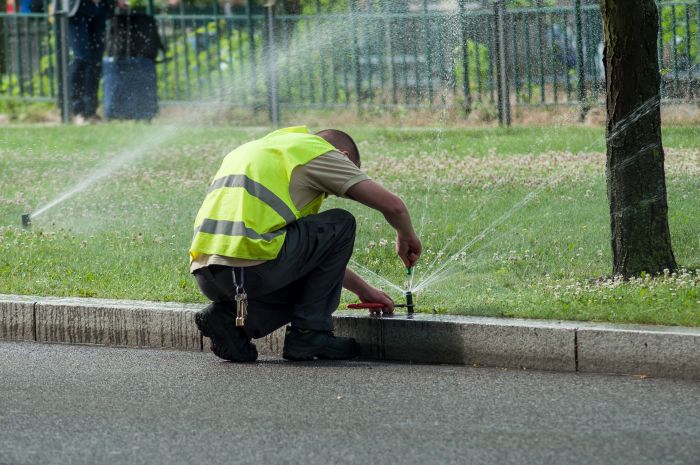
A week before the opening National Women’s Soccer League match at CPKC Stadium in Kansas City, Missouri, the grounds supervisor needed landscape plantings freshened up for the season and annual plants installed to provide color. That also meant activating the irrigation system and ensuring it was ready for spring.
But when Ryan Lawn & Tree’s irrigation crew turned on the water, the system ran continuously. With a system spanning the perimeter of a professional soccer stadium, finding a potential leak could be a daunting task.
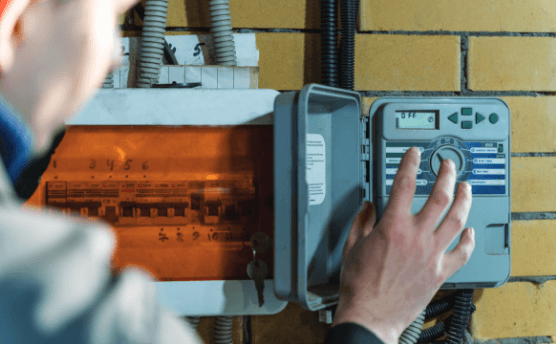
“I thought we were going to be walking around for a while to find the problem,” says Ryan Markway, CIC, CIT, Kansas City metro irrigation department manager for Ryan Lawn & Tree. “I started at the controller and found zones two through seven were showing as open, so I knew where to start looking.”
 Within five minutes, he found the leak beneath freshly poured concrete and was able to isolate the issue. Time is money on every site, but especially on high-profile projects on short timelines.
“Knowing where the wire break was directed me to where the main line break was,” he says. “I’ve seen techs chase electrical issues for two to three hours, and through experience and training, I can usually go to a site and find it in 20 minutes. Time is money, and being able to troubleshoot saves both.”
Many troubleshooting projects start the same way. The client reports wilting plants or brown turf, or they’ve received a high water bill. Either symptom points to failures within the system.
The question is: Where and how quickly can it be found? Finding the problem can be even trickier on a site without a design map or installation history.
“Today’s irrigation systems are far more advanced than they were a few short years ago,” says Mark Dalley, CIC, CID, CIT, CLIA, CLWM, director of water management for DLC Resources, headquartered in Phoenix. “As manufacturers continue advancing communication, solar and wireless technology, systems are more capable but also more complex — meaning more can go wrong. That’s why having irrigation specialists who stay current with the technology and continue evolving their troubleshooting skills is essential.”
Contractors who take time to train their crews save time and money when they’re able to more quickly diagnose an electric or hydraulic issue within a system.
“A stuck valve that is leaking, even if it’s one or two gallons a minute at the end of the month, could turn into a 100,000- or 200,000-gallon leak and a very large water bill.”
— Mark Dalley, CIC, CID, CIT, CLIA, CLWM, director of water management, DLC Resources
Start with the reported issue
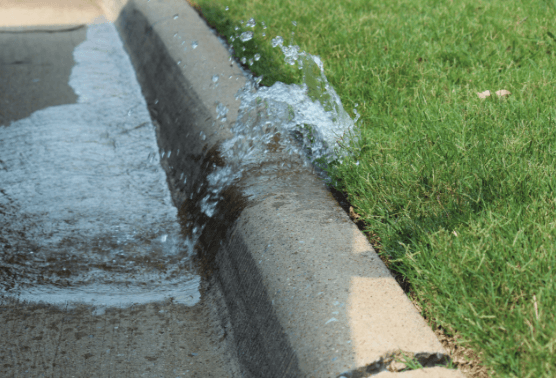 The client’s issue dictates the first steps, according to Dalley. If the client reports a high water bill, his crew checks the water meter first.
“A lot of these zones can cover large areas, maybe up to one acre in size,” he says. “If you have sandy soil, water may never surface. A stuck valve that is leaking, even if it’s one or two gallons a minute at the end of the month, could turn into a 100,000- or 200,000-gallon leak and a very large water bill.”
With the controller off, they check the meter to see if the needle is spinning. If so, it indicates a mainline leak or a stuck valve.
“Then we go look for wet spots where it could be leaking or pop open the valve box to see if any are leaking,” Dalley says.
When DLC Resources inherits a site without documentation, crews create maps to avoid wasted time during future service calls.
“Having a good map of all your valves is the best thing that aids in this situation, so you’re not guessing and walking around aimlessly,” he adds.
Troubleshooting electrical issues
One of the most common electrical problems DLC Resources crews find on nearly every site they take over is improper wire splices. Sergio Olvera, CIT, CLIA, the company’s irrigation training manager, says the crews are trained to start troubleshooting at the controller with an ohms test.
“The ohms test will tell us if the wire path or solenoid is good or bad or if there are any other issues,” he says. “Anything outside of 20 to 60 ohms is going to flag an issue.”
At the controller, crews go station by station, noting any that are outside the acceptable range to confirm location and speed up the process if they don’t yet have a site map. Then they use a wire tracker to find the wire path to the valve. Once the valve is confirmed to be in working condition, they check the wire splices.
“Most of the time, the issue is the wire splices,” he says. “We’ve found a lot of wire splices where it’s only the wire, no protector cap, and that creates a lot of issues with electrical components.”
Improper wire splices are problematic enough on conventional systems, but even more so on two-wire systems.
“If you don’t use a DBR/DBR Y6 grease cap, it’s even worse, because you have decoders and more expensive components in the controller that can be damaged if the electrical connection portion of the system is incorrect,” he says.
Markway agrees that electrical troubleshooting and the ability to use a multimeter are skills Ryan Lawn & Tree emphasizes in training sessions. Its crews must start at the controller to confirm power at the clock and resistance to all stations before starting to dig holes on a site.
“We do that to confirm the power and that it’s not a blown GFI unit,” he said. “Wires get cut all the time, and rodents can get into valve boxes, so we want to verify first that we actually have a wire path to the zone.”
“Time is money, and being able to troubleshoot saves both.”
— Ryan Markway, CIC, CIT, Kansas City metro irrigation department manager, Ryan Lawn & Tree
Troubleshooting hydraulics issues
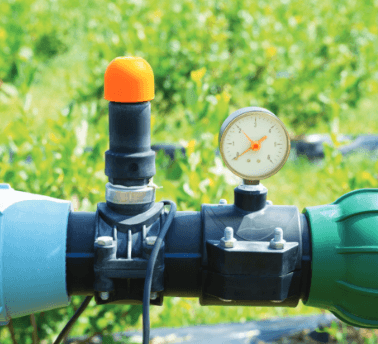
 Unlike electrical issues, which can often be diagnosed at the controller, hydraulic problems require more advanced troubleshooting skills, including reading pressure and flow and observing system performance.
Markway said the company trains its technicians to take static and dynamic pressure readings at the backflow and compare the difference. But pressure alone doesn’t tell the full story. The key is pairing it with flow. Early in his career, Markway misread those signals.
“When I was just getting into the business, I assumed that having a huge drop from static to dynamic was a restriction somewhere prior to the backflow,” he says. “What I learned over time is that if you have a huge pressure drop and high flow, you have a leak somewhere out in the system. But if you have a huge pressure drop and low flow, you have to work back toward the water source, and there is likely a restriction or half-open valve closer to the water source.”
Missing that step leads to misdiagnosis that he sees frequently because troubleshooting hydraulics is a lot harder than electrical troubleshooting.
“Pressure issues is one of the things that is challenging to learn,” he says. “Often, having more than one perspective on the site can help find a major leak due to pressure issues and flow.”
Even when hydraulics aren’t the issue, distribution often is, especially on builder installations. Coverage problems show up in systems that technically operate but fail over time.
“We see a lot of mixed nozzles and sprinkler heads,” Olvera says. “We’ll see Hunter I20s or I25s on a zone with Rain Bird 5000s and others mixed in. Or we’ll see a random mix of No. 2, No. 3 and No. 4 nozzles.”
 He adds that crews also often find low or crooked heads, resulting in over- or underwatering and improper screw adjustment in the rotor nozzles. Instead of using the screw to hold the nozzle in place, he sees some sites where the screw is used to throttle or shorten the water stream. That can turn a 30-foot rotor into something more like a spray.
DLC Resources relies heavily on “wet checks” to identify and rectify these scenarios. With the system running, the crew confirms that all sprinklers are rotating as intended — that 180-degree heads are fully sweeping back and forth, and that 360-degree heads complete at least two full rotations. Crews also look for heads that move but stop partway, which indicates a failed rotor, and that head-to-head coverage is occurring in each zone.
“The wet checks help our crews find and fix issues before they become big problems, and they can learn a new site,” he says. “That helps us speed up troubleshooting when there is a problem later on.”
Investing in training
Good troubleshooting starts with a person who is good at and enjoys problem-solving, according to Dalley, who believes it takes a certain mindset to become skilled at troubleshooting.
“You want someone who gets excited about figuring it out,” he says.
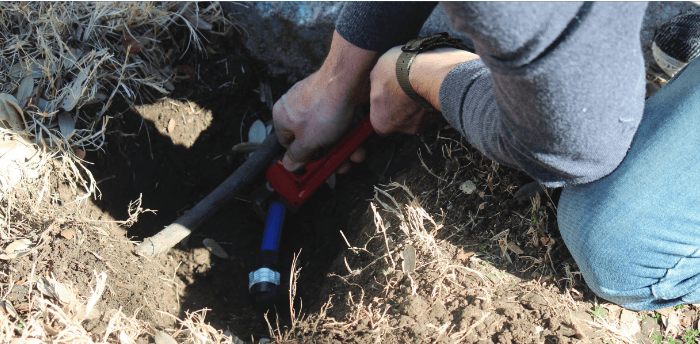
Training is also critical. At DLC Resources, Olvera leads a 10-week apprentice training program that combines classroom instruction with field experience. Even experienced technicians participate in a condensed advanced version of the program.
“We include a two-day classroom training that covers things like wildlife safety, because here in the desert, we find a lot of rattlesnakes, tarantulas and scorpions,” he says. “Then they spend time in the field with a mentor learning how to troubleshoot and do repairs.”
Similarly, Ryan Lawn & Tree dedicates four hours a day in January and February to training. Much of that time is spent in a classroom setting, teaching practical skills technicians will use in the field. The company leans on its own experienced staff to lead many of the sessions, especially on the more technical topics.
“Sometimes the best way to learn is to teach. They may feel like they already know the material, but once they start building a training, they realize there are gaps, or they see things in a new way,” Markway says. “It really comes down to building a culture of continuous learning. We keep our people on year-round, and we invest heavily in them, especially in the winter.”