What is Kelvin?
Kelvin (K) is a measurement of a light source’s color appearance — specifically whether the light looks warm (yellow/orange) or cool (white/blue).
2700K–3000K → Warm white
3500K–4000K → Neutral to cool white 5000K+ → Daylight / blue-white
Lower Kelvin numbers appear warmer. Higher numbers appear cooler. That’s the simple explanation.
But in real-world landscape lighting, Kelvin temperature is far more nuanced than just picking a number.
Kelvin is ultimately about preference
First and foremost, Kelvin temperature comes down to homeowner preference. Lighting is emotional. It affects mood, perception and how someone feels when they pull into their driveway at night. Some homeowners love a warm, inviting glow. Others prefer a clean, crisp, modern aesthetic.
There is no universal “right” Kelvin. There is only what is right for the architecture, the materials, the landscaping and the client’s taste. A good designer listens before selecting.
Everyone sees Kelvin slightly differently
Here’s something most lighting contractors never discuss: Not everyone perceives color temperature the same way.
As we age, the lens of the eye naturally yellows. Cataracts and other age-related changes can significantly affect how warmth and coolness are perceived.
For example, a 65-year-old homeowner may perceive 3000K as a warmer muted tone whereas a younger homeowner may perceive this Kelvin temperature more crisp and vibrant.
This is why educating the customer matters. And understanding your client’s age and visual sensitivity matters. Kelvin is not purely technical — it’s biological.
Architectural Style and Kelvin Temperature
Architecture should heavily influence Kelvin selection.
Mediterranean and old-world homes with dark roof tiles, stone veneers, heavy textures, warm stucco, and barrel tile roofs almost always look best at 2700K. Warm light complements terracotta tones, rich earth-colored materials, aged stone textures, and wood accents. Using 4000K on a Mediterranean home often makes it feel sterile or washed out.
Transitional homes with lighter stucco, neutral materials, and clean but not ultra-modern lines typically look best between 3000K and 4000K, depending on finish colors. 3000K often provides slightly crisper plant illumination and better clarity on lighter façades while still maintaining warmth.
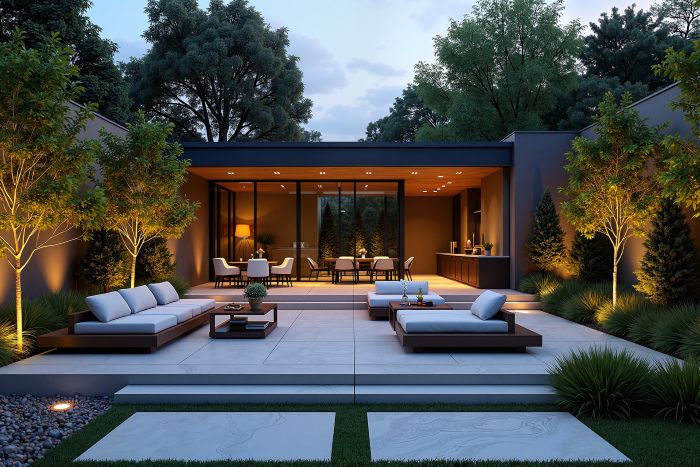
Modern and contemporary homes — smooth stucco, white or charcoal exteriors, linear architecture, metal, glass, and concrete — often perform best at 4000K to 5000K, sometimes even higher. Cooler temperatures enhance sharp architectural lines, clean shadow definition, white and gray tones, and minimalist landscapes. A modern home illuminated at 2700K can sometimes feel muddy or dated.
Material Reflectance Matters
Light doesn’t exist in isolation, it reflects.
- Dark brick absorbs light.
- White stucco reflects it.
- Natural stone scatters it.
- Wood warms it further.
A white house at 3000K may appear brighter than a tan house at the same Kelvin. A dark stone façade may benefit from a slightly warmer source to soften contrast. Kelvin selection should always consider the material’s light reflectance and natural undertones.
Plant Material Changes Perception
Green foliage shifts dramatically under different Kelvin temperatures.
- 2700K enhances warmth but can mute deep greens.
- 3000K often provides the most natural plant rendering.
- 4000K and above can make plants appear slightly gray or blue, especially tropical varieties.
Most landscapes typically feel the most natural and inviting between 2700K- 4000K.
The Importance of Dimming and Adjustability
Landscape lighting should evolve. Trees grow. Palms gain canopy. Landscapes mature.
Modern systems allow for fixture-level adjustments, transformer-based dimming, and zoning flexibility. This ensures that intensity and warmth can be refined over time, not just on installation day. A properly designed system should adapt as the property changes.
Final Thought: Kelvin Is a Feeling
At the end of the day, Kelvin temperature is not about numbers. It’s about how the home feels at night, how guests experience arrival, whether the space feels inviting or harsh, and whether the architecture is honored or overwhelmed.
Great lighting contractors/designers don’t just select a Kelvin. They interpret architecture. They understand psychology. They consider biology. They balance science and art.
And then — only then — do they choose the temperature.
Cory Moore is the president of Beacon Outdoor Lighting in Naples, Florida.