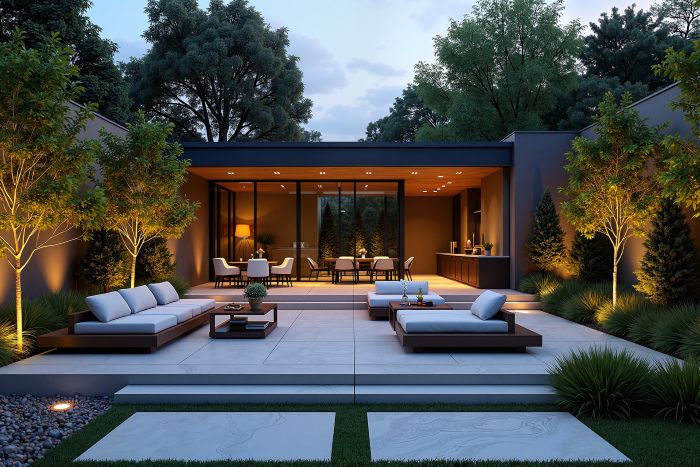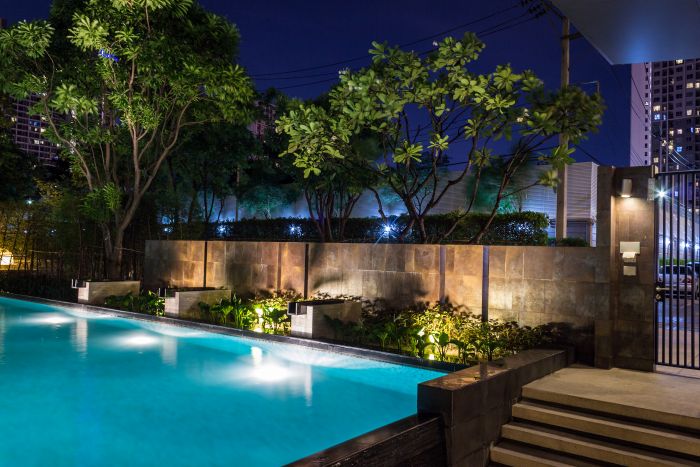
The outdoor lighting industry has matured tremendously over the last two decades. Today’s lighting professionals have access to better fixtures, better controls, better LEDs and more sophisticated technology than ever before. Yet despite these advancements, many lighting designs still fall short of their potential.
The reason is simple: great lighting design has never been about fixtures. It’s about understanding how people experience space.
Having spent nearly 20 years working in architecture, landscape architecture and outdoor lighting design, I’ve found that the most impactful lighting systems are rarely created by focusing on fixtures first. They are created by understanding the design intent behind a property and then using light to reinforce that vision after sunset.
One of the biggest breakthroughs in my career came when I stopped asking where fixtures should go and started asking why the property was designed the way it was.
One of the biggest misconceptions about landscape architects is that they primarily design planting plans. In reality, they design experiences.
Before selecting a material or drawing a line on a plan, they are thinking about how people will move through a property, where they will gather, what they will see, and how the space should make them feel.
They consider questions such as:
- Where do people arrive?
- What should they notice first?
- How should they move through the property?
- Which views deserve attention?
- Which views should remain hidden?
- What emotions should the space evoke?
As lighting designers, our responsibility is to continue that experience after dark.
Early in my career, I was eager to start placing fixtures. Over time, I learned that some of the most important design decisions happen long before a fixture is ever specified. Today, I spend significant time walking a property before beginning any design work. I study how people approach the home, where they gather, what they see from key vantage points, and how the space naturally guides movement.
Those observations often determine the lighting design long before a fixture location is identified.
Understanding hierarchy
Every great property contains hierarchy. Some elements are intended to command attention, while others serve a supporting role. Unfortunately, one of the most common mistakes in outdoor lighting is giving everything equal importance. When everything is illuminated equally, nothing stands out.
One exercise I still perform today is asking myself what three elements I would illuminate if I only had three fixtures available. Whether the property is a waterfront estate, mountain retreat, golf course residence or urban courtyard, the answer almost always reveals the hierarchy of the site.
The best lighting designs establish focal points, guiding attention and creating visual order. They tell the eye where to look.
Having spent years studying both architecture and landscape architecture, I’ve found that successful design is often less about what you choose to emphasize and more about understanding what deserves emphasis in the first place.
Learn to read outdoor rooms
Just as architects organize homes into kitchens, living rooms, dining rooms and bedrooms, landscape architects organize outdoor environments into a series of rooms.
These spaces may include
- arrival courtyards
- entertainment spaces
- pool environments
- garden retreats
- transitional pathways
- outdoor dining areas
Each serves a different purpose. Yet many lighting systems treat every area exactly the same.
A grand motor court should create a different feeling than a quiet garden retreat. An entertainment space should feel different than a side-yard pathway. Great lighting designers understand these distinctions and allow the lighting character to evolve throughout the property.
The goal is not consistency and appropriateness.
Learn to design from the house outward
Many lighting designers begin by looking at the landscape. In my experience, the strongest designs often begin with the architecture.
One lesson I carried over from my years working in high-end residential architecture is that the home should almost always dictate the design language of the property. The scale, proportions, materials and visual weight of the architecture establish the hierarchy that everything else follows.
When I arrive at a property, I typically spend more time studying the home than I do the landscape. Once I understand the architecture, decisions about focal points, circulation, visual balance and emphasis become much easier.
The architecture is usually telling you where the lighting should go. Most designers simply aren’t listening.
Study sightlines before fixture placement
My architectural training taught me that buildings are experienced from specific viewpoints. The same principle applies to outdoor lighting.
Before beginning a design, I often stand at the front door, the great room windows, the primary outdoor living area, and any elevated balconies or terraces. These locations frequently reveal the most important nighttime views and help determine where visual emphasis should occur.
One habit that dramatically improved my own work was learning to design from the viewing location rather than the fixture location.
The best lighting designs aren’t created from where the fixture sits.They’re created from where people stand.
Stop lighting objects and start framing views
Many lighting designers focus on illuminating individual elements. Landscape architects focus on creating compositions. This is a subtle but powerful distinction.
A tree by itself may not be important. A tree that frames the architecture may be essential.
A wall may not deserve illumination because of the wall itself, but because of how it helps establish depth within a larger composition.
One of the most valuable lessons landscape architecture taught me is that outdoor spaces should be experienced as a sequence. Great lighting should support that journey rather than compete with it.
Rather than asking, “What should I illuminate?” I encourage designers to ask, “What should people experience?” That single shift in thinking can completely transform a project.
Embrace negative space
One lesson many lighting designers struggle with is restraint. Darkness is not the enemy. It is a design tool. Landscape architects regularly use negative space to create contrast, visual relief, mystery and anticipation. Lighting designers should embrace the same philosophy.
Some of the most expensive homes I’ve worked on had fewer fixtures than modest residential projects because every fixture had a purpose. The absence of light is often just as important as the presence of light.
Without darkness, there is no contrast. Without contrast, there is no drama. Without drama, there is no memorable experience.
Design for depth, not brightness
Many outdoor lighting systems fail because they prioritize brightness over depth. Landscape architects create visual interest through layers. Lighting designers should do the same. The most compelling nighttime environments contain a foreground, middle ground, and background. They draw the viewer through the space rather than presenting everything at once.
When evaluating a scene, I rarely ask whether it’s bright enough. Instead, I ask whether it feels dimensional. Depth creates interest, scale and immersion. Brightness alone accomplishes none of those things.
Draw before you design
One habit I rarely see discussed within the lighting industry is drawing. Before a fixture is ever installed, the design should exist on paper. Whether through CAD plans, hand sketches, overlays or digital renderings, drawing forces designers to think through the project as a complete composition rather than a collection of fixture locations.
Throughout my career in architecture, landscape architecture, and outdoor lighting design, I’ve found that the projects that look the best at night are almost always the projects that were thoroughly planned during the day.
The fixture installation should be the execution of a design, not the discovery of one.
Study great design outside the lighting industry
One mistake many lighting professionals make is limiting their inspiration to other lighting projects. Some of the most valuable lessons I’ve learned came from studying architecture, landscape architecture, photography, art and even cinematography.
All of these disciplines deal with
- composition
- contrast
- hierarchy
- balance
- movement
- human perception
The principles are universal. If you only study lighting, you’ll become a better installer. If you study design, you’ll become a better designer.
Think like a designer, not a contractor
The outdoor lighting industry continues to evolve. Clients increasingly expect more than technical expertise. They want professionals who understand architecture, composition, scale, proportion and human experience.
My background in architecture taught me how buildings are composed. My background in landscape architecture taught me how people experience outdoor spaces. Combining those disciplines with outdoor lighting fundamentally changed the way I design.
The best lighting designers I know don’t spend most of their time talking about fixtures. They spend their time talking about experiences, sightlines, composition, movement and emotion.
Fixtures are simply the tools used to achieve those outcomes. Homeowners don’t buy fixtures.They buy feelings and experiences. They buy the way their property looks when their friends pull into the driveway.
When lighting designers learn to see properties through the eyes of a designer rather than an installer, they stop creating lighting systems and start creating environments.
And that is where truly memorable outdoor lighting begins.
About the Author
Cory Moore is the president of Beacon Outdoor Lighting in Naples, Florida.
Cory Moore is the founder and principal designer of Beacon Outdoor Lighting. With nearly two decades of experience in architecture, landscape architecture, and outdoor lighting design, he has designed thousands of lighting systems, including some of North America’s most significant residential lighting projects for Fortune 500 executives, professional athletes, and luxury estate homeowners. Cory is a four-time WAC Lighting Contractor of the Year recipient and is recognized nationally for his design-first approach to creating exceptional nighttime environments.